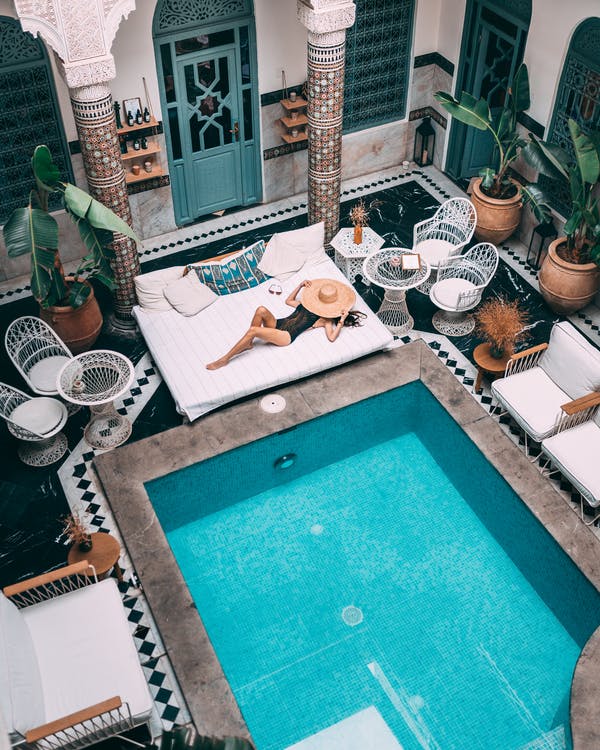
Morocco can work for a range of travel budgets, but there is no honest one-size-fits-all daily figure. Build your estimate from flights, accommodation, food, local transport, activities, and a contingency fund. If you prefer a private, fully planned itinerary, Paradijom’s current tour pages advertise packages from $300 per person per day; confirm the live price, inclusions, dates, and exchange rate before booking.
Quick facts for planning a Morocco budget
How much does it cost to travel to Morocco on a budget?
The answer depends on how you travel. An independent trip usually requires separate decisions about flights, accommodation, meals, intercity transport, activities, and local logistics. A private tour bundles some of those decisions, but the quote may be higher because it includes dedicated services and a more structured itinerary.
Use this simple planning equation before searching for deals:
Total Morocco budget = flights + accommodation + food + transport + activities + insurance + shopping + contingency.
Then create three versions of the trip:
1.Lean plan: shared or simple accommodation, local dining, public transport where practical, and fewer paid activities.
2.Comfort plan: private rooms or riads, a mix of local restaurants and planned meals, occasional private transfers, and more guided visits.
3.Private-tour plan: a tailor-made itinerary with the services listed in the quote. Compare the total price rather than looking only at the daily rate.
Do not copy a daily budget from another traveler without checking what it includes. One person may exclude international flights, while another may include a desert camp, private transfers, entrance fees, and guided visits.
What should you include in a Morocco travel budget?
How much should I set aside for flights?
Price flights separately from your in-country budget. The final amount changes with your departure airport, travel month, baggage, connection time, and flexibility. Search several arrival options, then check the cost and time of reaching your first destination from the airport.
Keep a separate line for airport transfers. A low airfare does not always produce a low total if the arrival transfer is long, late, or difficult to arrange.
“Flights to Marrakech (RAK) are available from major US, UK, and European cities. Check Google Flights or Skyscanner for current prices on your specific dates.”
“Airport transfer from RAK to the Marrakech medina takes approximately 20 minutes by private vehicle. Paradijom arranges private transfers from $25 per vehicle.
How much should I budget for accommodation?
Morocco offers hostels, guesthouses, hotels, and riads across its major destinations. A riad can add atmosphere and local character, while a hostel or simple guesthouse may reduce the nightly total. Compare the complete stay, not just the advertised room rate.
Check whether the price includes breakfast, taxes, city fees, air conditioning, heating, luggage storage, parking, and late check-in. In smaller towns and desert gateways, availability can be more limited, so a cheaper room may not be the best value if it creates an expensive transfer or a difficult arrival.
To save without removing the experience, stay near the part of the city you plan to visit most. A slightly higher nightly rate can be worthwhile if it reduces taxi fares and wasted time.
Riad prices in the Marrakech medina vary significantly by season and room type. We recommend checking Booking.com or contacting properties directly for current rates on your specific dates.”
“As a general principle — a riad $20–30 more per night inside the medina will save you more than that in daily taxi costs and give you immediate access to the experience you came for.”
How can I eat cheaply in Morocco?
You do not need to choose between fast food and luxury dining. Mix local bakeries, simple cafés, market stalls, and neighborhood restaurants with one or two planned dining experiences. Moroccan mint tea, bread, pastries, and familiar local dishes can fit into a varied itinerary without making every meal a major expense.
Ask whether bread, salads, drinks, service, or a cover charge are included before ordering. Keep a small food buffer for days when you are visiting a major attraction or traveling between cities and have fewer choices.
Food hygiene matters more than chasing the lowest price. Choose busy places with high turnover, wash your hands, and carry water when you are walking for several hours.
Choose restaurants and street food stalls that are visibly busy — high turnover means food is freshly cooked rather than sitting out. Wash your hands before eating, always drink bottled water, and carry a small bottle when walking the medina for several hours. Your comfort and health during the tour matters to us — Ben will always recommend places he personally trusts
Harira is one of Morocco’s most affordable and filling meals — available at neighbourhood cafés throughout the medina”
Neighbourhood restaurants away from the main tourist squares offer significantly better value than tourist-facing menus”
Fresh-pressed orange juice is available at street carts throughout the medina at very low prices
A full Moroccan meal at a local neighbourhood restaurant costs a fraction of what the same food costs at tourist restaurants near famous landmarks
What does transport cost in Morocco?
Compare trains, intercity buses, taxis, private transfers, and rental cars according to the route rather than assuming one mode is always cheapest. Rail can be practical on some city-to-city routes, while buses, shared taxis, or private vehicles may be more useful for rural areas, mountain roads, and desert itineraries. Check current schedules and fares with the relevant operator before finalizing your route.
A transport comparison should include:
•the ticket or rental price;
•airport and station transfers;
•luggage and seat fees, if any;
•the cost of reaching an attraction from the arrival point; and
•whether a guide or driver is included.
For a first visit, avoid packing too many distant destinations into a short trip. A route that looks inexpensive on a map can become costly when it requires repeated transfers, one-night stays, and last-minute tickets.
One of the most common mistakes first-time Morocco visitors make is trying to cover too many cities in too few days. A route that looks simple on a map — Marrakech, Fes, Chefchaouen, Essaouira, Sahara — can require 5 separate transfers, 4 one-night stays, and significant last-minute transport costs that were never in the original budget. Ben designs every Paradijom itinerary around the principle that depth beats distance — two nights in Fes reveals far more than one night in four different cities.
The overnight train between Marrakech and Fes is a comfortable and popular option — check current fares at oncf.ma”
CTM operates comfortable intercity buses between major Morocco cities — always compare the door-to-door cost including transfers at both ends”
Journey times vary by route and transport type — confirm current schedules directly with the operator before booking
Car rental is available in major Moroccan cities — compare full costs including insurance, fuel, and parking before deciding”
How much should I budget for attractions and activities?
Start with a must-see list, then label each item as free, ticketed, guided, or weather-dependent. Medinas, public squares, neighborhood walks, viewpoints, and some cultural experiences may cost little or nothing, while museums, monuments, desert excursions, cooking classes, mountain guides, and private transfers require a separate activity budget.
Look for official ticket pages or on-site prices rather than relying on old blog posts. Opening hours, advance booking rules, seasonal schedules, and photography policies can change. The official Moroccan National Tourist Office highlights experiences across medinas, mountains, gardens, desert regions, and coastal destinations, so choose activities that fit both your interests and your route.
Do not buy a city pass or combination ticket automatically. Calculate whether its included attractions match your actual itinerary.
Marrakech combination tickets and city passes can look like good value but rarely are for private tour clients. Most passes include attractions you may not visit, exclude the ones you actually want, and expire within a fixed number of days that may not match your schedule. Ben calculates entrance fees individually for every Paradijom itinerary — you pay only for what you actually visit, and all fees are included transparently in your tour price with no surprises.
Admission fees apply — current prices available at the entrance or via the official site
Opening hours vary by season — confirm before visiting or ask your Paradijom guide”
Some sites offer reduced or free entry on specific days — your guide will advise on the best timing
Check current pass inclusions carefully against your planned itinerary before purchasing
How can I save money on accommodation without losing the Moroccan experience?
Choose the right accommodation for the route, not just the lowest headline rate. A traditional riad in or near a medina can make walking easier and create a memorable stay. A modern hotel may be more convenient for parking, elevators, early departures, or families with specific accessibility needs.
Ask the property these questions before booking:
•Is the location inside the medina, outside it, or near a main road?
•Can a vehicle reach the entrance?
•Is air conditioning or heating available in the room?
•Are taxes and fees included in the displayed price?
•What happens if a late flight delays arrival?
Traveling outside peak periods can reduce pressure on the accommodation budget, but the best season depends on the destination and your tolerance for heat, cold, crowds, and weather-related changes.
What is the cheapest way to travel around Morocco?
There is no single cheapest method for every route. The best-value option is the one that balances the fare with time, reliability, connections, and the number of people sharing the cost.
For a city-focused itinerary, compare scheduled public transport with taxis and walking. For a route through mountain passes, kasbahs, and the Sahara, compare a multi-day private transfer or tour with the combined cost of individual tickets, accommodation, meals, activities, and local coordination.
If you rent a car, include fuel, tolls, parking, insurance, deposits, one-way fees, and the time required to navigate unfamiliar roads. If you use shared taxis, confirm the fare and destination before departure and keep smaller notes available.
If you rent a car, include fuel, tolls, parking, insurance,
deposits, one-way fees, and the time required to navigate
unfamiliar roads. If you use shared taxis, confirm the fare
and destination before departure and keep smaller notes
available.
If you choose to rent a car in Morocco, calculate the true cost before comparing it to a private Paradijom tour — fuel, motorway tolls, parking in medina cities (where cars cannot enter), mandatory insurance, deposit hold on your credit card, one-way drop fees between cities, and the significant time cost of navigating unfamiliar mountain roads and medina approaches. For shared taxis (grands taxis between cities), always agree the full fare and your exact destination before you enter the vehicle, and carry smaller denomination notes — drivers rarely carry change for large bills.
| Self-drive hidden cost |
Notes |
| Car rental base price |
Looks cheap online |
| Mandatory full insurance |
Often doubles the base price |
| Credit card deposit hold |
$500–1,500 blocked on card |
| Fuel — long Morocco circuits |
800–1,200km between cities |
| Motorway tolls |
Multiple toll plazas on major routes |
| Parking — medina cities |
Cars cannot enter medinas — park outside and taxi in |
| One-way drop fee |
Marrakech pickup → Fes return adds significant cost |
| Navigation stress |
Mountain roads, unmarked turns, medina approaches |
| Time lost |
Getting lost costs half a day on a short trip |
“A Paradijom private tour includes your own professional driver who knows every road, every shortcut, and every parking approach. No deposit. No navigation stress. No hidden fees. The total cost is often comparable to a self-drive when every real expense is included — and the experience is incomparably better.”
How can I plan a Sahara trip without overspending?
Treat a Sahara excursion as a complete package rather than a single activity. Compare the transfer to the desert gateway, the number of nights, the camp standard, meals, camel or walking experience, guide services, and return transport.
A lower headline price may exclude a long transfer, a private vehicle, luggage handling, or an activity you expected to be included. A higher price may be better value if it reduces unnecessary changes and gives you the accommodation and experience you actually want.
Pack sunscreen, a reusable water bottle, comfortable walking shoes, layers for temperature changes, and a scarf. Buying basic essentials before departure can help you avoid rushed purchases, but confirm airline, accommodation, and local safety requirements before packing.
Buying basic essentials before departure can help you avoid
rushed purchases, but confirm airline, accommodation, and
local safety requirements before packing.
Packing smart for Morocco saves money and stress on arrival. Basic essentials — sunscreen, lip balm, a lightweight headscarf, comfortable walking shoes, and a refillable water bottle — are available in Morocco but often at higher prices or limited brand choice in medina areas. Buy before you leave. That said, always confirm your specific airline’s baggage allowance, your accommodation’s laundry facilities, and any activity-specific requirements before finalising your bag — a Sahara desert night requires very different packing from a Marrakech city stay.
Clothing
Pack modest loose clothing for medina visits — covered shoulders and loose trousers for both men and women. This is cultural respect and practically reduces vendor attention. For the Sahara — warm layers are essential regardless of season. November desert nights drop to 5°C. A proper warm jacket, thermal base layer, and warm socks are non-negotiable even in autumn.
Footwear
Comfortable closed walking shoes for medina cobblestones — not sandals. The Fes medina has uneven ancient stone paths that are hard on feet after several hours. Flip flops for the desert camp shower and riad hammam.
Sun and skin
High SPF sunscreen — Morocco sun is strong even in October and November. Lip balm. After-sun for Sahara days. Hand sanitiser for before street food.
Documents and money
Passport valid 6+ months beyond travel dates. Multiple payment methods — cash dirhams for medinas, card for riads and restaurants. Keep a small amount of local currency always accessible for taxis and street food.
Electronics
Universal travel adapter — Morocco uses Type C and E plugs. Power bank for full medina days when you are away from your riad for 8+ hours. Camera with extra memory card — you will take more photographs than you expect.
Health and pharmacy
Any prescription medication in original packaging with doctor’s letter. Oral rehydration sachets. Basic pain relief. Antihistamine. Insect repellent for summer visits.
Sahara specific
This is the item most clients forget — a warm jacket for Sahara evenings. The day temperature in October is 30°C and the night temperature is 10°C. The swing is enormous. Paradijom provides blankets at camp but warm clothing for the fire and the stargazing session outside is essential.
Is a private Morocco tour worth the cost?
A private tour can be worth comparing when you value a personalized route, a dedicated guide or driver, coordinated accommodation, and fewer logistics to manage yourself. It may also be useful when you have limited time or want to combine cities, mountains, and desert areas efficiently.
Paradijom’s Custom Morocco Tours page describes an 8-day sample route through Marrakech, the High Atlas, Ait Benhaddou, the Dades Valley, the Sahara, Fez, and Casablanca. The page currently states that tours are private, tailor-made, fully inclusive, and advertised from $300 per day.
For a southern route, the Southern Gateway Tour page describes a 10-day private itinerary featuring the Sahara, kasbahs, the Rose Valley, Dades and Todra Gorges, Marrakech, and Fez. It currently advertises rates from $300 per person per day.
For a longer route, the Morocco Grand Tour page describes a 14-day private journey covering six cities, the Sahara Desert, the Atlas Mountains, and the Atlantic coast.
Use these pages as starting points, not as a substitute for a written quote. Ask what is included, what is excluded, whether the price is per person or per day, and how the itinerary changes for your dates and group size.
Booking advice
 Ask what is included, what is excluded,
whether the price is per person or per day, and how the
itinerary changes for your dates and group size.

 What should I pack to avoid unnecessary costs?
Pack items that are expensive or inconvenient to replace during a trip:
•sunscreen and personal medication;
•a refillable water bottle;
•comfortable walking shoes;
•light layers and a warmer layer for evenings or desert travel;
•a scarf for sun, wind, or respectful coverage where appropriate;
•photocopies or secure digital copies of essential documents; and
•payment cards plus a modest emergency cash reserve.
Avoid overpacking. Extra baggage fees, repeated taxi loading, and purchases made only because of limited luggage space can undermine an otherwise careful budget.
How can I experience Morocco’s culture on a budget?
Some of the most rewarding experiences come from slowing down rather than paying for more. Walk through a medina with a clear route, visit local markets respectfully, spend time in a public garden or square, and choose a small number of guided experiences that add context.
Learn a few polite Arabic or Moroccan Arabic phrases, ask before photographing people, and bargain respectfully where bargaining is customary. A low price should never depend on pressuring a vendor, guide, driver, or artisan.
The official Visit Morocco destination guide lists cities and regions including Marrakech, Fez, Rabat, Casablanca, Essaouira, Chefchaouen, Ouarzazate, and the Merzouga area. Use it to match your interests to a realistic route before you price the trip.
Which Morocco budget approach is right for you?
Choose independent planning if you enjoy comparing providers, booking separate services, and adapting the route as you travel. Choose a private itinerary if your time is limited, you want one coordinated plan, or the combined value of guiding, transport, accommodation, and activities outweighs the flexibility of booking everything separately.
If you are unsure, request a quote and ask for an itemized comparison. A useful quote should show the travel dates, group size, room basis, transport, guide services, meals, activities, taxes, exclusions, cancellation terms, and payment schedule.
Frequently asked questions about budgeting for Morocco
Is Morocco expensive for a first-time visitor?
Morocco can be planned at different price levels. Your total depends on the season, route, accommodation, food choices, transport, activities, and whether you travel independently or use a private itinerary. Build the budget category by category instead of relying on a single daily number.
How much money should I take to Morocco?
Take a payment method that works for your travel circumstances and keep a modest backup reserve. The right amount depends on whether accommodation, transport, and activities are prepaid. [VERIFY BEFORE PUBLISHING: confirm current payment acceptance, ATM access, exchange arrangements, and any cash recommendations with a current official or local source.]
Can I visit Morocco on a small budget?
Yes, many travelers reduce costs by choosing simple accommodation, eating a mix of local and planned meals, limiting paid attractions, and grouping destinations into an efficient route. The cheapest option is not always the safest or most practical, so leave room for reliable transport and unexpected changes.
Is a private Morocco tour good value?
It can be good value when the quote includes services you would otherwise arrange separately, such as private transport, guiding, accommodation coordination, and selected activities. Compare the full inclusions and exclusions rather than comparing only the advertised daily rate.
How many days do I need in Morocco?
The right length depends on the number of regions you want to visit. A shorter itinerary should focus on fewer destinations, while a longer trip can combine imperial cities, the Atlas Mountains, southern Morocco, the Sahara, and the coast. The itinerary team confirm realistic travel times for the final route.
What is the best way to save money in Morocco?
The most dependable savings usually come from planning the route before booking, choosing accommodation near your main activities, comparing complete transport costs, and deciding which paid experiences matter most to you.
Should I book Morocco accommodation and tours in advance?
Book the elements that are date-sensitive or central to the trip in advance, especially during busy periods. Leave some flexibility only when you have checked availability, cancellation terms, and the consequences of changing the route.
Plan an affordable Morocco adventure
A successful Morocco budget is not about finding the lowest price for every item. It is about matching the route, comfort level, and experiences to the money and time you actually have. Price the full journey, keep a contingency fund, and verify every current fare and inclusion before paying.
For a private itinerary, contact Paradijom with your dates, destinations, and budget. The team can help you compare a tailored route with the separate costs of planning it yourself.
The 4 Questions Every Client Should Ask —
Question 1 — What is included?
“Every Paradijom quote includes: private vehicle and driver, expert English-speaking guide on all relevant days, luxury riad accommodation, Sahara luxury camp, all meals as specified, all entrance fees, and Ben’s personal WhatsApp available 24 hours during your trip.”
Question 2 — What is not included?
“International flights, personal travel insurance, gratuities for guides and drivers, personal shopping, and any meals not specified in the itinerary are not included. There are no hidden costs — everything excluded is listed clearly in your written quote.”
Question 3 — Is the price per person or per day?
“Paradijom prices are quoted per person per day for multi-day tours, and per vehicle for day trips. Your written quote will always show the total price for your complete group — never a per-person figure that changes at the last moment.”
Question 4 — How does the itinerary change for my dates and group size?
“Every Paradijom itinerary is adjusted for your specific travel dates — festival seasons, weather conditions, and local events all affect the optimal route. Group size affects vehicle type and camp accommodation. Ben confirms all adjustments in writing before any deposit is requested.”
Private tours from $300/person/day — exact quote provided within 24 hours based on your dates and group”
Ben aims to reply within 2 hours during Marrakech business hours — WhatsApp +212 663 498 126
Subject to availability — contact Ben for your specific dates
Includes breakfast daily and meals as specified in your written itinerary — confirmed in your quote
Typical 7-day route — exact destinations confirmed in your personalised written itinerary.
“For a fully personalised private experience, see our luxury Morocco tours designed by Ben Khalid.”
References