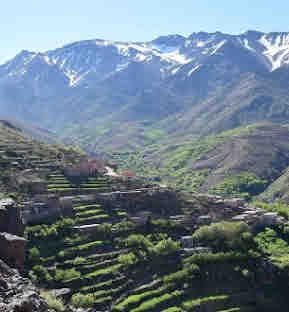
The best place for a classic high-mountain trek is Toubkal National Park in the High Atlas. For a wider Morocco hiking itinerary, combine it with Tazekka’s cedar forests, Talassemtane’s Rif landscapes, the Mgoun Massif and Valley of Roses, or the coastal wetlands of Souss-Massa. The right choice depends on whether you want altitude, forest, village walks, wildlife, or a private itinerary from Marrakech.
Morocco is more than its imperial cities and Sahara dunes. Its mountain ranges, river valleys, forests, gorges, wetlands and Atlantic coastline create several distinct hiking experiences. This guide compares the country’s best-known trekking regions so you can choose a route that matches your fitness, season and travel style.
Quick facts about hiking in Morocco
Which places are best for hiking in Morocco?
The five regions below are the strongest starting points for a Morocco trekking plan. They are not interchangeable: Toubkal is a high-altitude mountain destination, Talassemtane is a Rif forest and limestone landscape, and Souss-Massa is a lower-elevation coastal nature experience.
1. Toubkal National Park: the classic High Atlas trek
Toubkal National Park is the most natural choice for travelers who want Morocco’s signature mountain experience. The park lies in the High Atlas and includes Jbel Toubkal, widely described as the highest mountain in North AfricaThe Moroccan National Tourist Office currently describes Jbel Toubkal as 4,167 m and the highest peak in North Africa, and identifies Toubkal National Park as a High Atlas protected area. It also describes the classic ascent as a two- or three-day trek from Imlil, with an overnight at a mountain refuge before the summit. Visit Morocco
For current safety guidance, the UK government advises Atlas Mountain hikers to research trails, understand the required experience, hire a professional guide, carry appropriate supplies, and have appropriate travel insurance. GOV.UK
Toubkal National Park is a natural choice for travelers who want Morocco’s signature mountain experience. The park lies in the High Atlas and includes Jbel Toubkal, at 4,167 meters, widely recognized as the highest peak in North Africa. The classic ascent typically takes two to three days from Imlil, with an overnight stay at a mountain refuge before continuing toward the summit.
.
Trekking here can range from valley walks around Imlil to demanding multi-day ascents. The landscape changes quickly from cultivated terraces and villages to high passes, rocky slopes and snow-covered summits. Altitude is a serious consideration: an official Morocco tourism account describes the climb toward Imlil as increasingly strenuous even for an experienced hiker, with the route reaching about 1,700 metres above sea level during the walk.
Best for: first-time Atlas trekkers, high-mountain scenery, village-based routes and travelers starting or ending in Marrakech.
Plan for: acclimatization, layered clothing, reliable water, sturdy footwear, a weather check and a qualified local guide for demanding routes.our wording is good. Based on current official guidance, I would make it slightly more precise and avoid implying that every Toubkal route has the same permit/refuge requirements. The Moroccan National Tourist Office recommends trekking boots, sleeping bags, gloves and jackets and describes the ascent from Imlil as a two- or three-day trek with mountain-hut accommodation. UK government guidance recommends researching the trail, carrying essentials such as water and appropriate clothing, using a professional guide, and having appropriate insurance. Visit Morocco
Plan for: acclimatization, layered clothing, reliable water, sturdy footwear, a weather check, and a qualified local guide for demanding routes. Allow extra preparation for high-altitude conditions, particularly when snow or winter weather may affect the trail.
2. Tazekka National Park: cedar forests, caves and mountain scenery
Tazekka National Park is a strong option for hikers who prefer wooded mountain landscapes to exposed high-altitude trails. Sources describe the park, in Morocco’s Middle Atlas near Taza, as a protected area associated with cedar and oak woodland, rocky terrain, caves and waterfallsI would keep the core idea, but tighten the factual wording because the official sources differ on the park’s current area/extent and the broader proposed/expanded boundaries. The Moroccan biodiversity authority places Tazekka near Taza in the northern Middle Atlas and describes cedar, holm oak, cork oak and other forest formations, while the Moroccan National Tourist Office describes the park as an area of caves, canyons, oak forests and cedar. Morocco Biodiversity
Tazekka National Park is a strong option for hikers who prefer wooded mountain landscapes to exposed high-altitude trails. Located near Taza in the northern Middle Atlas, the park is known for its cedar and oak forests, mountain terrain, caves and other natural features.
The experience is different from Toubkal. Instead of focusing on a single summit, a Tazekka visit can be shaped around forest walks, viewpoints, geological features and local rural landscapes. Conditions vary by trail, so route difficulty should be confirmed locally before departure.
Best for: forest walks, geology, quieter routes and a northern or eastern Morocco itinerary.
Plan for: navigation support, footwear suited to uneven ground and confirmation of access to caves, waterfalls and any restricted areas.
3. Talassemtane National Park: the Rif Mountains near Chefchaouen
Talassemtane National Park brings a greener, more rugged character to Morocco trekking. Located in the northern Rif Mountains, it is associated with limestone peaks, forested valleys, rivers and the hiking area around Akchour .
This is a useful choice for travelers who want to pair a walk in the Rif with time in Chefchaouen. Routes can be built around a day walk or a longer trek, depending on weather, transport and the availability of a local guide. The park’s terrain can become slippery or difficult after rain, especially near watercourses and rocky sections.
Best for: Rif Mountain scenery, forest trails, waterfalls, village connections and a Chefchaouen extension.
Plan for: non-slip footwear, a weather check and a route plan that includes transport back from the trailhead.
4. Mgoun Massif and the Valley of Roses: mountain villages and cultural landscapes
The Mgoun Massif is a trekking region rather than a single national park. It is known for dramatic High Atlas scenery, deep valleys and traditional villages. The nearby Valley of Roses is associated with rose cultivation and seasonal agricultural landscapes, making this region especially appealing to hikers who want culture as well as scenery.
A multi-day Mgoun itinerary typically requires more logistical planning than a short Atlas excursion. Travelers should confirm the route, mule support, overnight arrangements, river crossings and local conditions with an experienced operator before departure. the chosen trail’s classification, walking stages, rose-bloom timing and current access.
Best for: multi-day trekking, village hospitality, valleys, gorges and a slower cultural journey.
Plan for: a local trekking team, luggage or mule logistics, flexible staging and a contingency plan for weather or river conditions.
5. Souss-Massa National Park: a coastal nature and birdwatching walk
Souss-Massa National Park offers a lower-altitude alternative to Morocco’s mountain treks. South of Agadir, the protected landscape is associated with the Atlantic coast, estuaries, lagoons, dunes, cliffs and wetlands. These habitats make the park a notable destination for birdwatching as well as walking.
The original Paradijom article states that more than 250 bird species, including flamingos, use the park: current species count and the exact source. A safer editorial promise is to describe Souss-Massa as a coastal wetland landscape where visitors may see resident and migratory birds, subject to season and local conditions.
Best for: birdwatching, coastal scenery, gentle nature walks and travelers combining hiking with Agadir or the Atlantic coast.
Plan for: binoculars, sun protection, sufficient water, comfortable walking shoes, and confirmation of the designated visitor area and access arrangements before your visit. For wildlife-viewing experiences, consider arranging an eco-guide familiar with the park and its conservation rules.
Explore Agadir Souss Massa
What is the best Morocco hiking itinerary from Marrakech?
For a first visit, a practical itinerary is to base the mountain portion near the High Atlas and add city or desert experiences around it. A short version could include a private Atlas Mountains day trip, while a longer itinerary could allow time for acclimatization and a multi-day trek in or around Toubkal National Park.
A tailor-made route might look like this:
1.Marrakech: arrive, recover from travel and review the hiking plan.
2.High Atlas foothills: walk through valleys and villages with a private guide.
3.Imlil or another mountain base: begin a longer trek only after checking weather, fitness and altitude considerations.
4.Cultural or desert extension: continue toward an imperial city, the Dades Valley or the Sahara, depending on the trip length.
5.Return to Marrakech or the coast: finish with a rest day before departure.
When is the best time to hike in Morocco?
Spring and autumn are generally the most comfortable seasons for many Moroccan hiking areas, but there is no single best month for every trail. High Atlas routes can remain cold or snowy at elevation, while coastal and lower-elevation landscapes follow different weather patterns.
Before booking, check the exact route and elevation rather than relying only on a national seasonal average. Confirm weather, snow, heat, rain, river levels, trail closures and daylight hours with a local guide or operator.
What should you pack for a Morocco trekking trip?
Pack for the highest point of the route, not only for the departure city. Essential items usually include broken-in hiking shoes, breathable layers, a warm layer, rain protection, sun protection, a reusable water bottle, personal medication, a headlamp and a small first-aid kit. A sleeping bag may be required for some mountain itineraries; confirm this with the operator or accommodation provider.
For wildlife and wetland walks, add binoculars and a lightweight daypack. For village routes, modest clothing and a respectful approach to photography are appropriate. : final packing list against the selected itinerary, accommodation and season.
Is hiking in Morocco suitable for beginners?
Yes, if the route is matched to the hiker and planned conservatively. Morocco offers gentle valley and coastal walks as well as strenuous, high-altitude treks. Beginners should start with a shorter guided route, avoid treating altitude as a measure of fitness, and leave flexibility for weather or fatigue.
A private itinerary can be adjusted around walking pace, rest stops, transport and accommodation. Paradijom’s  Atlas Mountains private day trip is a relevant starting point for travelers who want mountain scenery without committing to a multi-day summit trek.
what the Toubkal approach feels like on the ground
The most useful first-hand description located for this rewrite comes from the official Morocco tourism site, which recounts a walk from Asni toward Imlil. The account describes a dusty path, blossoming trees, views over a river and villages, shaded sections beneath cedar, pine and oak, and a growing sense of effort as the route gains elevation.
It also records that the walker was already around 1,700 metres above sea level and felt the altitude despite being an experienced hiker. That detail is valuable for geographic experience optimization because it sets an expectation that an apparently moderate approach can feel harder than its distance suggests.
This is not a Paradijom staff field report. It is an attributed first-person account published by Morocco’s official tourism office.
Frequently asked questions about hiking in Morocco
What is the best national park in Morocco for hiking?
Toubkal National Park is the clearest choice for a classic High Atlas hiking experience. Choose Talassemtane for the Rif Mountains, Tazekka for forest and geological scenery, and Souss-Massa for coastal nature and birdwatching.
Can I hike in Morocco without a guide?
Some short, well-known walks may be possible independently, but a local guide is advisable for unfamiliar terrain, high-altitude routes, multi-day treks, changing weather and village-based itineraries. Confirm current rules and conditions before setting out.
How many days do I need for a Morocco trekking trip?
A day trip can introduce you to the Atlas Mountains. A multi-day itinerary is better for high-mountain trekking or the Mgoun region because it allows for acclimatization, slower walking and logistical flexibility. The exact number of days depends on the route and whether you want to add Marrakech, the Sahara, imperial cities or the coast.
Is Toubkal suitable for first-time hikers?
The answer depends on fitness, altitude experience, season and the selected route. First-time hikers should not assume that a high summit is equivalent to a normal day walk. Discuss acclimatization, weather, guide support, equipment and turnaround plans with a qualified local operator.
Can I combine hiking with a luxury Morocco tour?
Yes. A private itinerary can pair guided walking with luxury riads, private transport, cultural visits and rest days. Paradijom’s tailor-made Morocco tours can be adapted around a preferred trekking region and pace.
How do I plan a private Morocco hiking itinerary?
Tell Paradijom your travel dates, hiking experience, preferred landscapes, approximate walking days, accommodation style and any mobility or dietary needs. Contact Paradijom to request a custom route and confirm current availability.
Plan your Morocco hiking adventure
Morocco’s national parks and trekking regions reward different kinds of travelers. Choose Toubkal for altitude and High Atlas drama, Tazekka for forests, Talassemtane for Rif scenery, Mgoun for a multi-day cultural trek, or Souss-Massa for coastal habitats and birdwatching.